
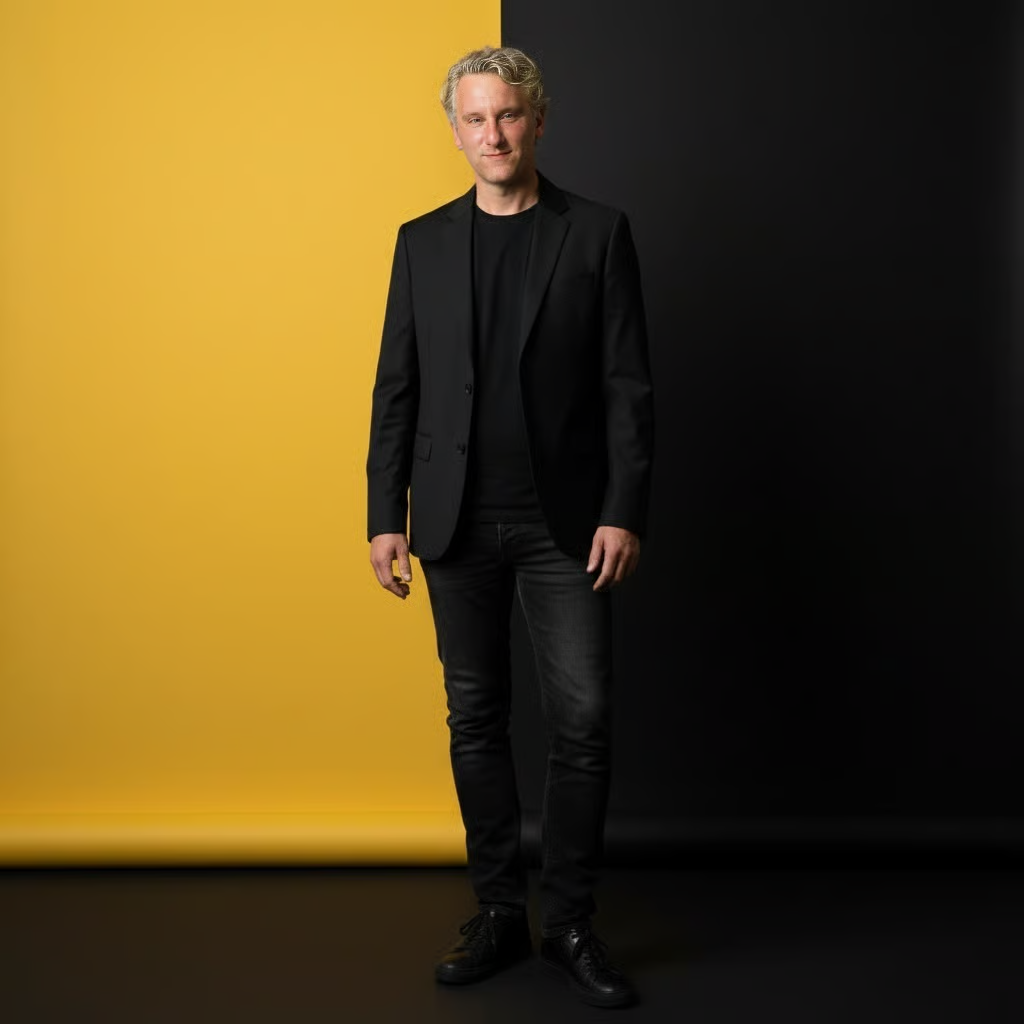
Founder · Operator · Cultural Architect

I build companies at the place where AI, entertainment, and human experience are rewriting each other.

Running Action Signal, Clankers, Side A, and Wonderland — plus an active practice as a Creative Producer in the Machine Cinema community. One operating thesis: the era of AI as creative collaborator — not tool — changes everything about how stories get made, how audiences form, and how culture moves. Every company I'm building is a live bet on a different edge of that question.

Michael Ronen portrait Topanga Canyon, CA
The arc
From theater to technology. From spectator to participant. The thesis doesn't change.
Michael Ronen

I started in Berlin, DJing in clubs and directing immersive theater in abandoned warehouses — the kind where the audience wears earpieces and becomes the characters rather than watching them. That early obsession with what happens when you move someone from spectator to participant has never left. It's in every company I've built since. The question is always the same: what does it take for something to actually land in a human being?

From Berlin I moved into technology. Viorama — a neural video company — got acquired by Giphy. Our code now powers Giphy Stickers across Meta's platform, which means it's touched hundreds of millions of people who never knew my name, which is exactly how it should go. Then Splash: one million 360° videos, a SXSW Jury Award. ShaderVerse. Social Play Club, which started as a structured serendipity experiment and became the core connection methodology for Kinnernet and DLD — two of the most selective founder gatherings in the world. Sparklverse, designed for Burning Man's Virtual Burn during the pandemic. Each thing taught me something the next thing needed.

"AI isn't a tool — it's a collaborator. That changes what entertainment is, what an audience is, and what it means to make something. The companies that understand this in 2026 will look, by 2030, like they had an unfair advantage."

Wonderland came out of a conviction that brands are the next generation of media companies — and that AI changes what's actually possible for a brand willing to act like one. The studio became the place where the Play Economy thesis turned into a working system: real customer truth in, synthetic audiences testing every hook before a dollar of production is spent, an AI writer room turning signal into scripts, and serial vertical episodes that compound into owned distribution. And it produced the book: The Play Economy, the argument that the Industrial Revolution didn't just reorganize labor, it taught us to be ashamed of play. Huizinga was writing Homo Ludens in 1938 — play predates civilization and defines it. What's happening with AI isn't disruption. It's correction.

The current portfolio is the thesis in motion. Action Signal — AI audience intelligence, built with Domenick Crimmins, for sales and growth teams who need to know what lands before they commit the budget. Clankers — an AI entertainment studio and character universe for the AI-native era, where the relationship between audience and character is fundamentally different from anything that came before. Side A — the vinyl listening community that's a counterargument to algorithmic music consumption and an argument for shared attention. Wonderland — the brand content studio, turning real customer truth into AI-produced serial vertical episodes that compound into owned distribution. Alongside the portfolio, an active practice as a Creative Producer in the Machine Cinema community — generative cinema for brands, live audiences, and cultural moments. The thread across all of it: AI as creative collaborator, not tool.
Not a portfolio — a single operating thesis
the work.

Four companies plus an active creative practice. One operating thesis. These aren't separate things — they're one operating system.

The thesis
The Play Economy
Book & intellectual framework
AI as creative collaborator, not tool — that changes what entertainment is, what an audience is, and what it means to make something.

Johan Huizinga published Homo Ludens in 1938 — the argument that play predates civilization and defines it. The Industrial Revolution taught us to be ashamed of it. What's happening now with AI and culture isn't disruption — it's correction. The Play Economy is the name I've given to this shift: from brands that broadcast to brands that invite, from customers as targets to customers as collaborators. Liquid Death, Duolingo, Patagonia — these aren't anomalies. They're the model. Every company in the portfolio is a live bet on a different dimension of this thesis. AI isn't the subject. It's the condition under which the thesis accelerates.

Read the argument on LinkedIn
Chapter one
Action Signal
Founder & CEO · B2B SaaS · 2024–present
The person writing a review at midnight, furious or delighted, is telling you something no focus group ever will.

Action Signal is AI audience intelligence for sales and growth teams. We mine real customer language — reviews, comments, search behavior, competitor signals — and build synthetic audience segments that let you test messaging before you produce anything. The goal is simple: know what lands before you commit the budget.

Built with Domenick Crimmins — two Afghanistan deployments, USMC, grew a DTC channel 450% without believing in conventional wisdom. We kept hitting the same wall with every brand we worked with: teams drowning in AI tools that were answering adjacent questions instead of the actual decision. The actual decision is always the same: what do I say about this product, to which person, in which moment, and how do I know it's going to work? Action Signal reverses the sequence. Audience truth first. Synthetic segments from real customer language. Tested hooks before production. Then a writers room that turns signal into script.

actionsignal.ai
Chapter two
Creative AI Projects & Collabs
Creative Producer · Machine Cinema community · 2024–present
Active Gen AI creator and Creative Producer. Member of the Machine Cinema community.

The Machine Cinema community is a collective of AI filmmakers, technologists, and creative producers building what generative cinema is going to look like — in public, in collaboration, in production. I produce inside that community. The projects below are the ones I've contributed to: brand cinema, mission work with local NGOs, regenerative retreats in Topanga, and live AI cinema events at LA Tech Week venues.

Work showcase — generative cinema produced inside the Machine Cinema community.
  • BrandJam — with Meili Vodka. A community production exploring AI-generated brand cinema.
  • ImpactJam — with local LA NGOs (Doo Shelter). Community production in service of mission work.
  • RegenJam — with Butterfly Mountain, a Topanga retreat. Community production at the intersection of generative cinema and regenerative practice.
  • Nature Meets Technology — produced in Topanga Canyon as part of LA Tech Week.
  • Live AI Cinema — produced at TCL Chinese Theatre and Caltech as part of LA Tech Week.
Explore the Machine Cinema community
Chapter three
Clankers
Founder · AI Entertainment Studio · 2025–present
The next generation of iconic characters won't come from a writers room alone. They'll come from the space where human creative direction and machine intelligence meet.

Clankers is an AI entertainment studio and character universe built for the AI-native era. Not characters adapted for AI — characters that could only exist because of it. A new kind of entertainment that treats AI as co-author, not production tool.

The streaming era produced content at industrial scale. The AI era produces something different: characters with genuine intelligence, story universes that respond and evolve, audiences who don't just watch but interact, argue, and co-create. Clankers is built on the thesis that when AI can inhabit roles with personality, memory, and responsiveness, the relationship between audience and character changes fundamentally. The fans aren't watching a universe. They're building it.

clankers.ai
Chapter four
Side A
Active · Music & Community Platform · 2023–present
What happens when you take away the skip button isn't frustration. It's attention.

Side A is a music and vinyl discovery community platform built on a deliberately analog premise: a host chooses one record, invites up to twenty people, and the group listens together from first track to last — without skipping. The format is the argument. No algorithm. No queue. No personalization. Just twenty people in the same room with the same record, paying attention together.

This is deliberately the opposite of how music is consumed in 2026. Streaming optimizes for retention by serving what you'll tolerate without complaint. Side A optimizes for the thing streaming can't produce: a shared reference point, a specific memory, a conversation that starts from the same forty-five minutes everyone just experienced. The contradiction of building an analog experience with a digital platform is the whole point.

side-a.com
Chapter five
Wonderland
Founder · Brand Content Studio · 2019–present
Brands are becoming media channels. Wonderland helps them do it right — with AI, audience truth, and a writer room that ships weekly.

Wonderland is the brand content studio. We help brands stop running ads and start running shows — built on a closed loop: real customer language, synthetic audience testing, an AI writer room, and serial vertical episodes designed to convert. The loop runs every week. Customer truth in. Episodes out. Owned distribution compounding.

Three ways to work with us — Signal Sprint ($8K–$15K) for audience intelligence and validated hooks, Writer Room Pilot ($15K–$35K) for a 30-day live show pilot, and Brand Studio (ongoing retainer) for the full content studio buildout. Clients include Meili Vodka, Modern Gourmet Foods, and Redbud/General Mills. The Clankers show is our own proof — every system we sell to a brand, running on our own IP, publicly, weekly.

Get in touch
Speaking & Facilitation

I've been on stages. I'd like to be on yours.

I speak at the intersection of AI, entertainment, and culture — and I facilitate sessions for leadership teams and creative communities that need more than a keynote. What I bring is a builder's thesis and a director's eye: I'm interested in what's actually happening in the room, and in the shift that's underway whether organizations are ready for it or not.

Invite me to speak
Topics
  • The Play Economy and the future of brand communities
  • AI as creative collaborator — what it changes about entertainment, authorship, and audience
  • Building companies around a cultural thesis
  • The AI role play: what happens when AI can inhabit any character
  • Facilitation: leadership workshops, creative retreats, brand strategy sessions
500K+ Views
TEDx — on the Play Economy, AI, and the return of the audience as collaborator.

The talk that crystallized the thesis behind everything I'm building. Now past half a million views and counting.

Past events
TEDx LA Tech Week — CalTech LA Tech Week — TCL Chinese Theatre BrandJam RegenJam Impact Jam Walk & Jam
On facilitation

Beyond keynotes, I design and lead workshops for leadership teams, creative retreats, and brand strategy sessions. A theater director's job is to hold a room and shape what emerges from it — that's exactly what good facilitation is. If you're planning an offsite or retreat and want something that produces real outcomes rather than another deck, reach out.

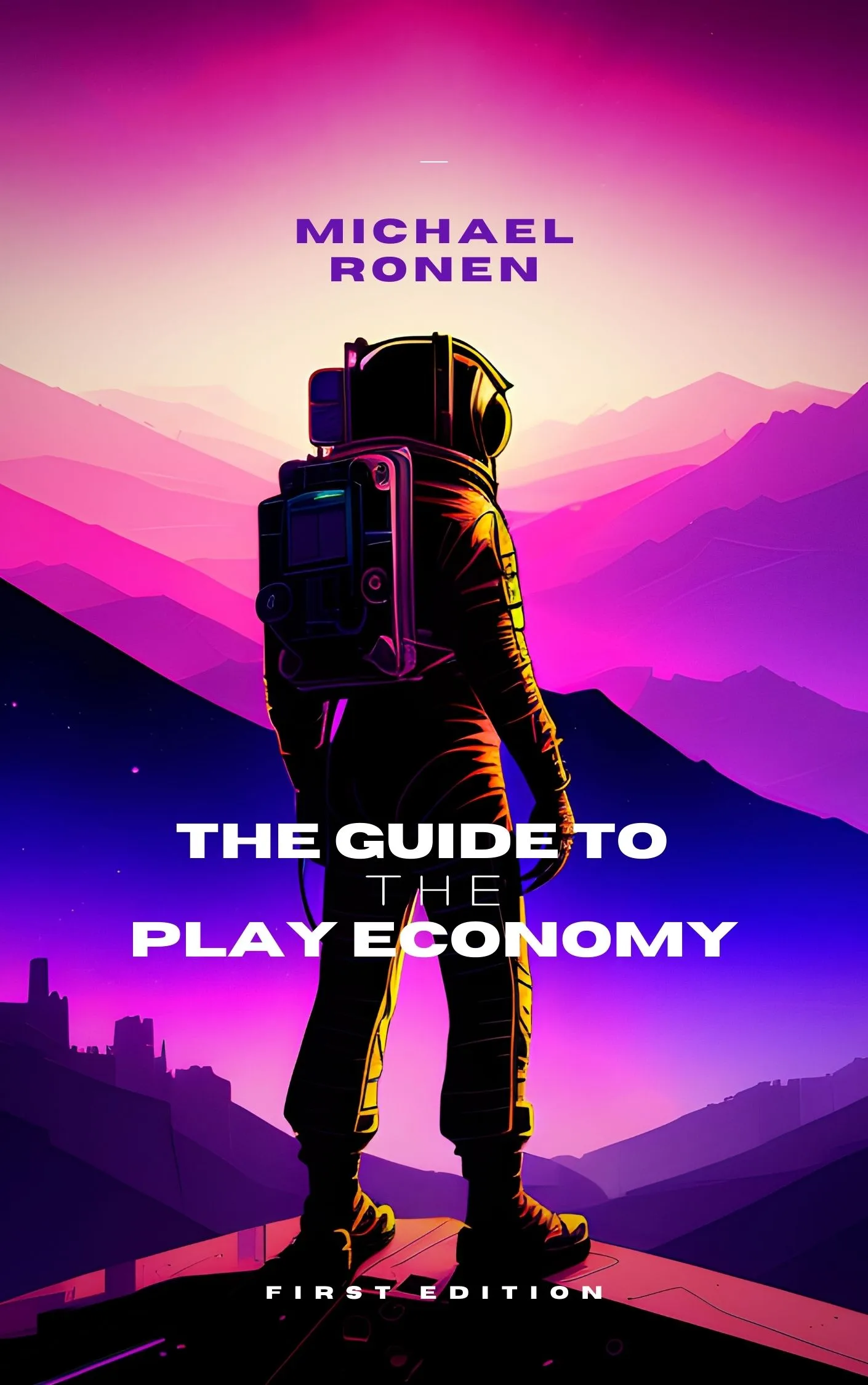
The Guide to the Play Economy — book cover
Published Work

The Guide to the Play Economy

by Michael Ronen

The argument that the Industrial Revolution didn't just reorganize labor — it taught us to be ashamed of play. Huizinga was writing Homo Ludens in 1938: play predates civilization and defines it. What's happening with AI isn't disruption. It's correction. This is the operating manual for the brands, builders, and creators rebuilding for the era where audiences are collaborators and play is the point.

Get it on Amazon
Writing
writing.

Published on LinkedIn. The longer argument for everything above.

The AI Role Play: When AI Plays Characters for Us and With Us

The Play Economy thesis just got a new chapter. When AI can inhabit any role — teacher, opponent, companion, villain, mirror — the nature of story changes. So does the nature of identity. This is the argument at the center of everything I'm building.

Notes from Live AI Cinema at TCL Chinese Theatre

Producing a live AI cinema event at TCL Chinese Theatre with the Machine Cinema community for LA Tech Week. What it taught me about the gap between AI as a generation tool and AI as a collaborator that actually has a point of view in the room with an audience.

What Action Signal Taught Me About Truth

The customer in a focus group knows they're being watched. The person writing a review at midnight doesn't. That gap — between performed preference and revealed behavior — is where every good campaign lives.

The Algorithm Doesn't Know What You Want to Hear

Spotify's Discover Weekly solves for the wrong problem — not what you want, but what you'll tolerate without leaving. Side A is the counterargument: twenty people, one record, no algorithm, no skipping. What happens when you take away the skip button isn't frustration. It's attention.

Play Economy 2026: The Return of the Audience as Collaborator

Liquid Death sold water. Duolingo taught languages. Patagonia sold fleece. None of them are primarily in those businesses anymore. The product was always the behavior — the game, the ritual, the cause. Now add AI as a creative collaborator and the thesis accelerates.

Brands Are the Next Media Companies

Liquid Death didn't outspend Bud. Duolingo didn't outspend Babbel. They out-attentioned them — by running serial content like a media company, not running ads like a brand. Wonderland is the system for the next wave: customer truth in, AI-produced weekly episodes out, owned distribution compounding. Stop guessing on hooks.

What Vinyl Taught Me About Product

A record has two sides for a reason. Side A earns the right to say the complicated thing by first saying the simple thing well. The constraint is the discipline. Digital product development has produced a generation of builders who are extraordinarily good at iteration and extraordinarily bad at commitment. Vinyl forecloses. The record is the record.

Why I'm Building AI for Sales Teams Who Hate AI

Domenick and I met at a children's birthday party. Both veterans. Both building from first principles. The company started because we kept hitting the same wall: teams drowning in tools that answered adjacent questions while the actual decision — what do I say, to whom, how do I know it works? — went unanswered. Action Signal is what we kept wishing existed.